


Shipping Mixed-Material Furniture from Bali: When One Certificate Is Not Enough (Part 2)

Updated: Apr 24
This is Part 2 of a series on wood export certificates from Bali. Part 1 covered V-Legal and FLEGT: what they are and which one applies based on your destination. This post covers what happens when your items are made from more than one material.
4. When Your Items Are Mixed Materials
Bali's furniture rarely uses one material alone. A wooden chair might have a woven grass seat. A teak frame might carry a rattan back. A dining table could combine solid wood with a stone inlay. These combinations are part of what makes Bali's craftsmanship distinctive — and they also affect which export certificates apply.
The wood component still triggers V-Legal or FLEGT, as covered in Part 1. But additional materials layer additional requirements on top.
Wood plus plant fibers (grass, bamboo, rattan, seagrass): V-Legal or FLEGT plus a Phytosanitary Certificate.
Wood plus stone: V-Legal or FLEGT plus an LS Stone certificate (or LHV for precious stone).
Wood plus metal: V-Legal or FLEGT only. Metal does not require its own certificate.
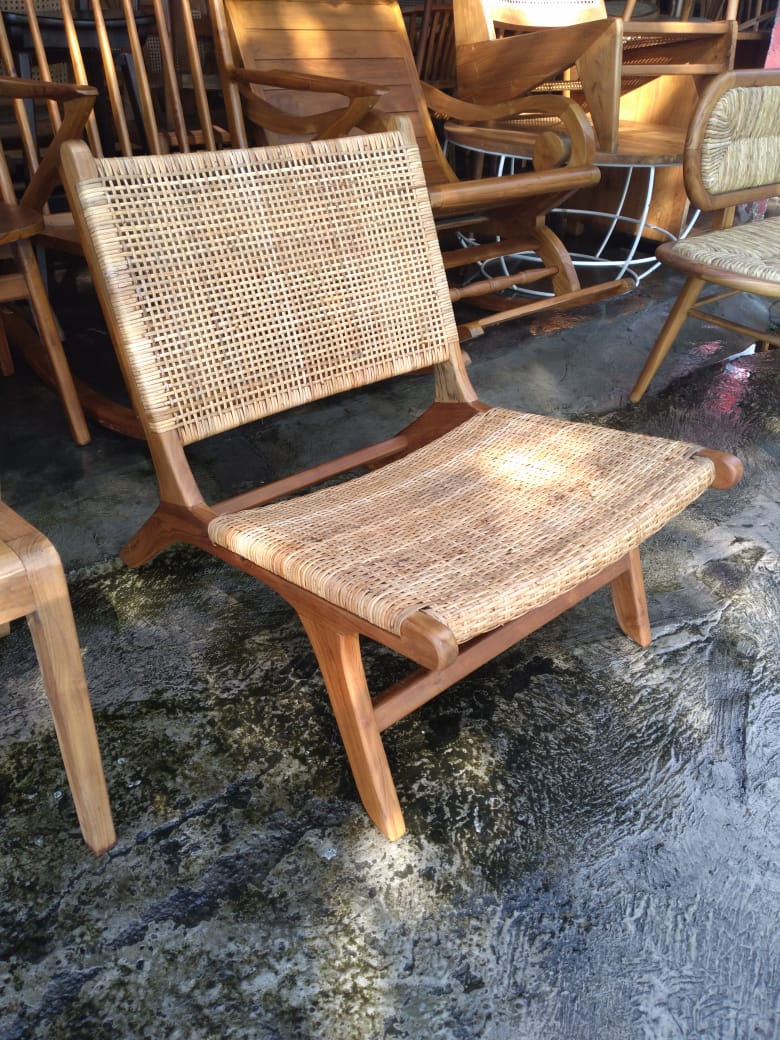
A Rattan And Wooden Chair
5. Why We Ask About Materials Before the Packing List
The packing list is the document that locks in what is being shipped, how it is classified, and which certificates apply. Once goods are packed and the packing list is finalised, changing the certificate requirements creates delays and extra cost.
We have seen it happen: a buyer confirms a packing list as "wooden furniture" when several pieces have woven seagrass seats. The Phytosanitary Certificate was not in the original plan. By the time this was caught, the packing was done and the container booking was confirmed. Everything had to be paused.
This is why one of the first things we ask every new buyer is: describe the full material composition of your items, not just the primary material. A chair described as "wooden" that has a grass seat is not a wooden item for export certificate purposes. It is a mixed-material item, and the Phytosanitary requirement applies to the grass component regardless of how much of the piece it represents.
6. Does the Supplier Handle the Certificates, or Do You?
In Indonesia, V-Legal and FLEGT certification sits with the exporter — in practice, the freight forwarder, not the artshop. The artshop produces the goods and provides the materials. The freight forwarder applies for the certificate on behalf of the shipment.
What we need from the artshop is confirmation that their timber is legally sourced and that they hold the supporting documentation required for the certificate application. Most established Bali artshops have this in order. If they do not — if this is the supplier's first export, or if they have never produced V-Legal documentation before — that is a risk that needs to be flagged before any order is placed.
One of the first questions we ask every new buyer: "Have your suppliers shipped from Bali before? Have they provided these certificates for previous shipments?" If the answer is no, we treat it as a risk item from day one.
Part 3 covers a separate topic: raw timber exports from Bali — logs, construction wood, and wood slabs — which follow an entirely different set of rules.
Jerry Gusti Made — PT Intai Rainbow. Assurance, Delivered, since 1989


Comments